

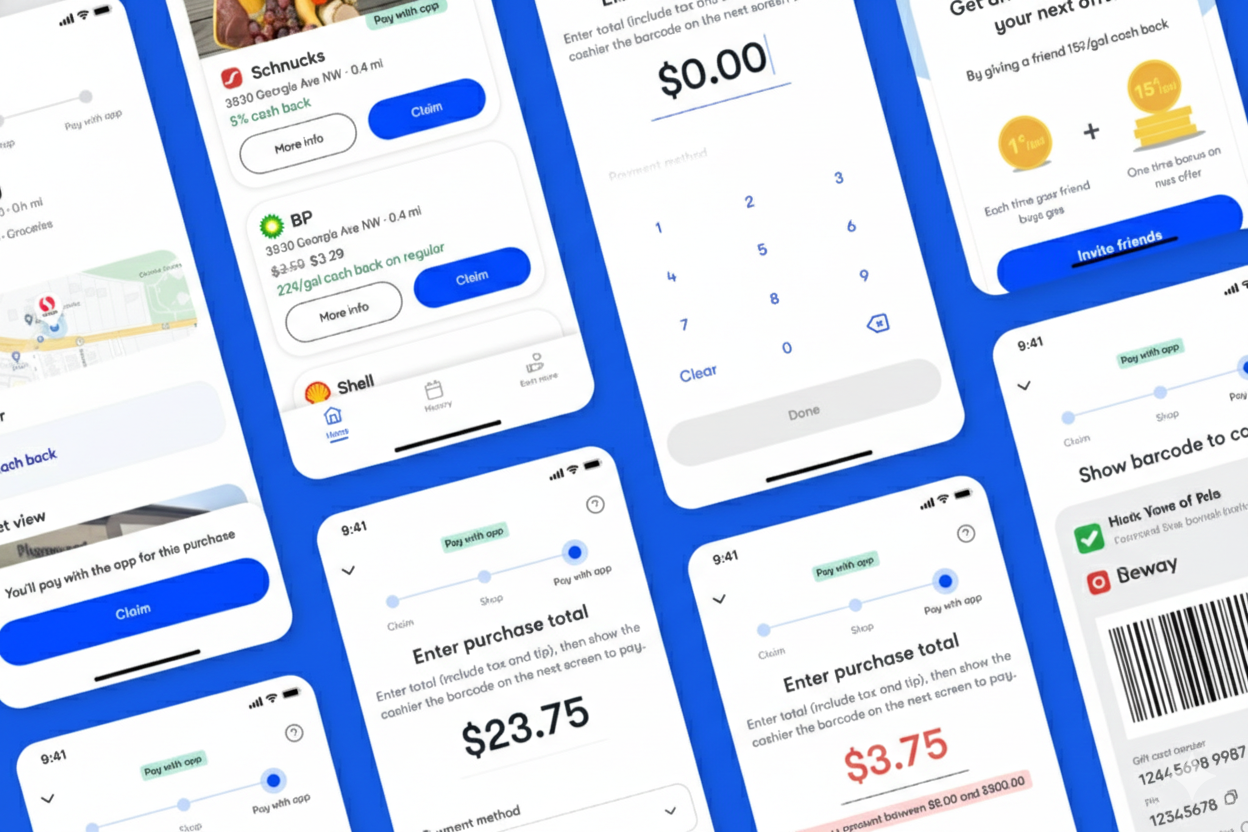

Stabilizing Payments to Unlock 251% Transaction Growth
Redesigning transaction infrastructure to unlock scale and stabilize growth.
ROLE Head of Design
FOCUS Consumer + Merchant Experience
TIMELINE 2022 - 2023
$2M
Annual Revenue Lift
Revenue unlocked through transaction stabilization
50%
Dispute Rate Reduction
0.69% → 0.33%
20%
Increase in Engineering Velocity
Design system + QA institutionalized
The Inflection Point
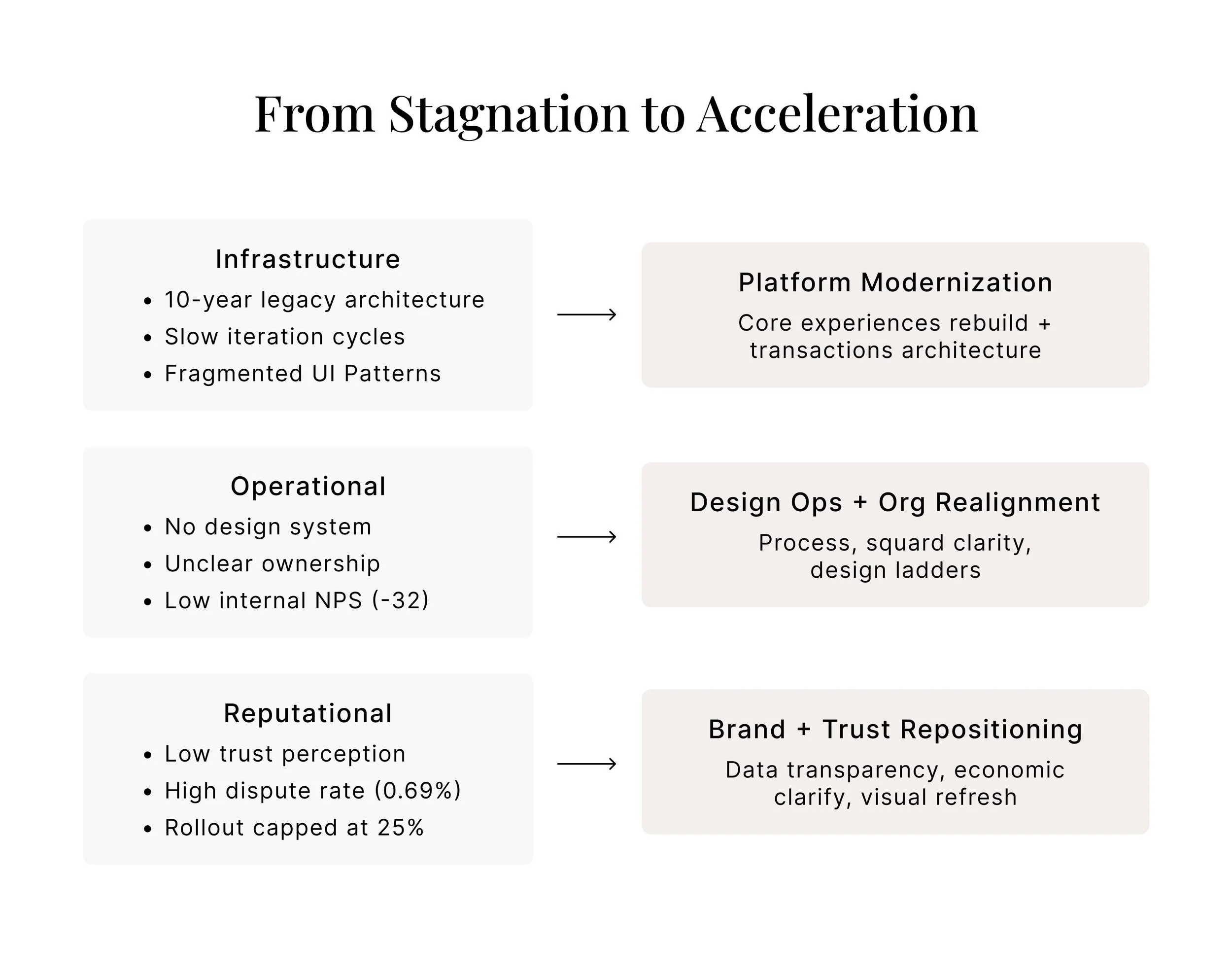
Upside wasn’t just facing payment instability — it was operating on aging infrastructure with plateauing growth and declining user trust.
10-year-old app architecture limiting iteration speed
Inconsistent UI patterns across growth surfaces
Revenue growth plateauing
Payment disputes nearing Stripe’s termination threshold
01 STRATEGIC FRAMING
Dispute Ratio
.69%
Near Stripe’s 0.75% termination threshold — creating existential payment risk.
Dispute Burn
$18.8k
Operational drag driven by chargebacks.
Internal NPS
-32
Design + engineering misalignment slowing delivery and trust.
Capped Rollout
25%
“Pay with App” restricted to a fraction of users due to dispute instability.
Rebuilding the Core Experience
Upside’s consumer app was constrained by legacy infrastructure, inconsistent UI patterns, and no shared system foundations. We rebuilt the product to enable velocity, trust, and scalable transaction growth.
02 CONSUMER APP
CORE SYSTEMS
-
Introduced Upside’s first unified design system — component library, tokens, and documentation — enabling consistent UI patterns and accelerating engineering delivery.
-
Rebuilt the 10-year-old app infrastructure and modernized the full mobile experience. Standardized navigation, visual hierarchy, and interaction patterns across surfaces.
-
Added in-app wallet functionality and structured payment flows, enabling secure on-platform transactions and reducing operational risk.
-
Redesigned sign-up and authentication flows to reduce friction, improve account security, and support scalable user growth.
-
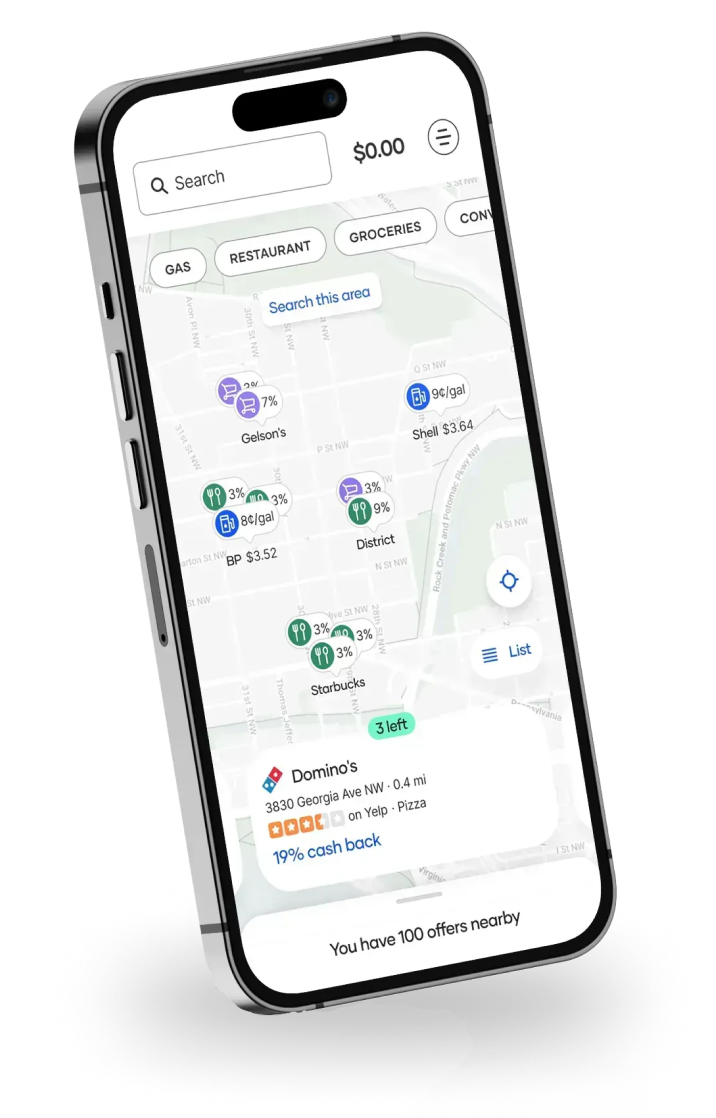
Rebuilt merchant discovery with improved location clarity, proximity logic, and redemption pathways — reducing friction from browse → claim → transact.
FUNCTIONAL PROTOTYPE
Deep Dive: Wayfinding
Discovery friction limited transaction intent.
We redesigned maps and offer discovery to create clearer merchant proximity, real-time savings visibility, and a predictable redemption path.
03 MERCHANT DASHBOARD
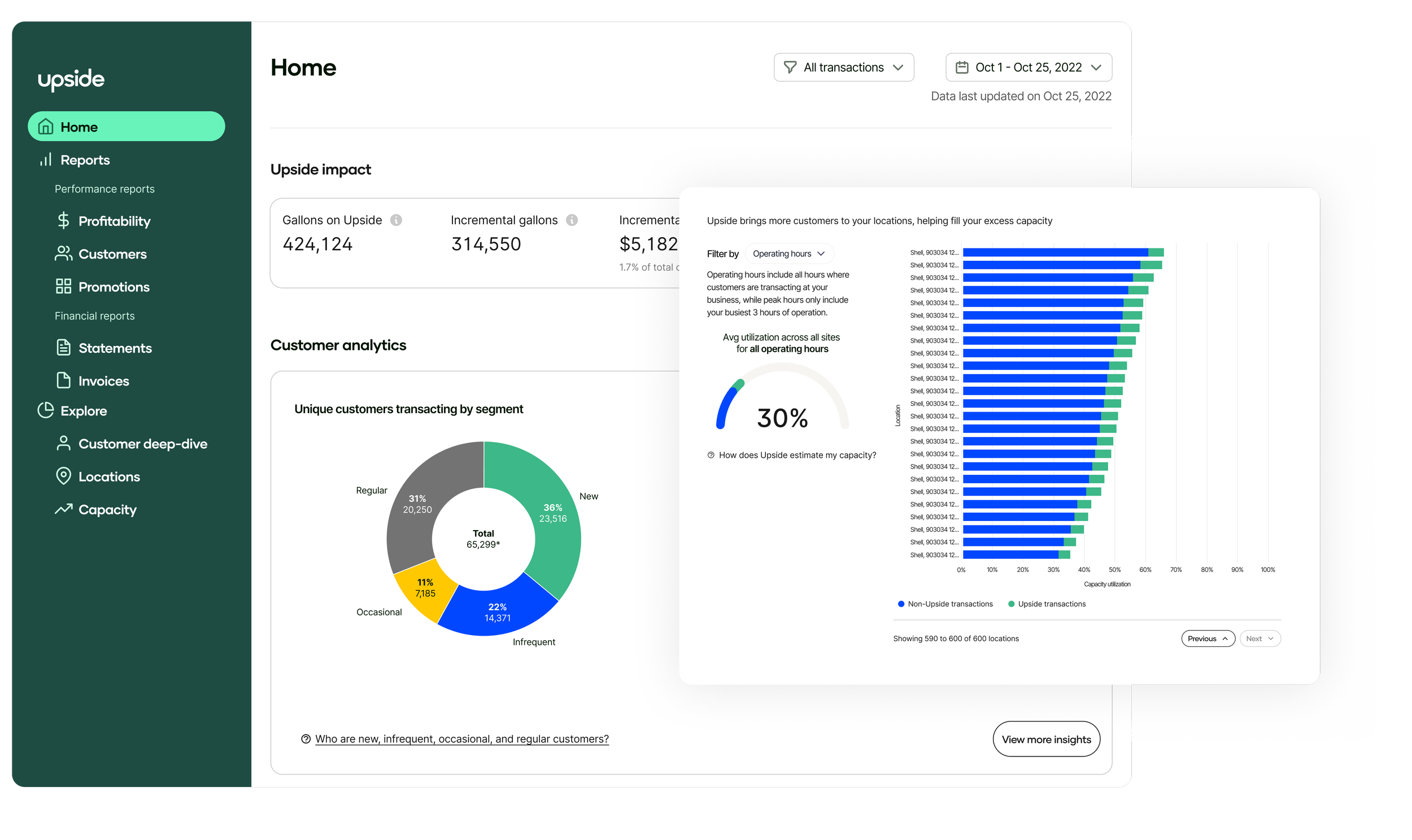
Unlocking Merchant Clarity
As Upside expanded from fuel into grocery and multi-vertical retail, the merchant tooling lagged behind the product vision.
We rebuilt the information architecture and rewrote system-level microcopy to support:
-
Surface-level metrics were replaced with structured reporting — impressions, redemptions, payouts, and ROI in one unified view.
-
Evolved the model from single-vertical fuel offers to configurable grocery and retail campaigns.
-
Rebuilt to support easier exploration of campaign analytics.
04 BRAND + GROWTH
Building Trust and Expanding Reach
Upside was perceived as transactional and low-trust.
We partnered across marketing and product to reposition the brand around:
Consumer savings credibility
Merchant transparency
Clear economic exchange
This included:
Full visual refresh and reskin across mobile
Brand system modernization
Performance marketing landing pages
Campaign creative for grocery expansion
Growth became product-led and brand-reinforced.



05 DESIGN OPS + CULTURE
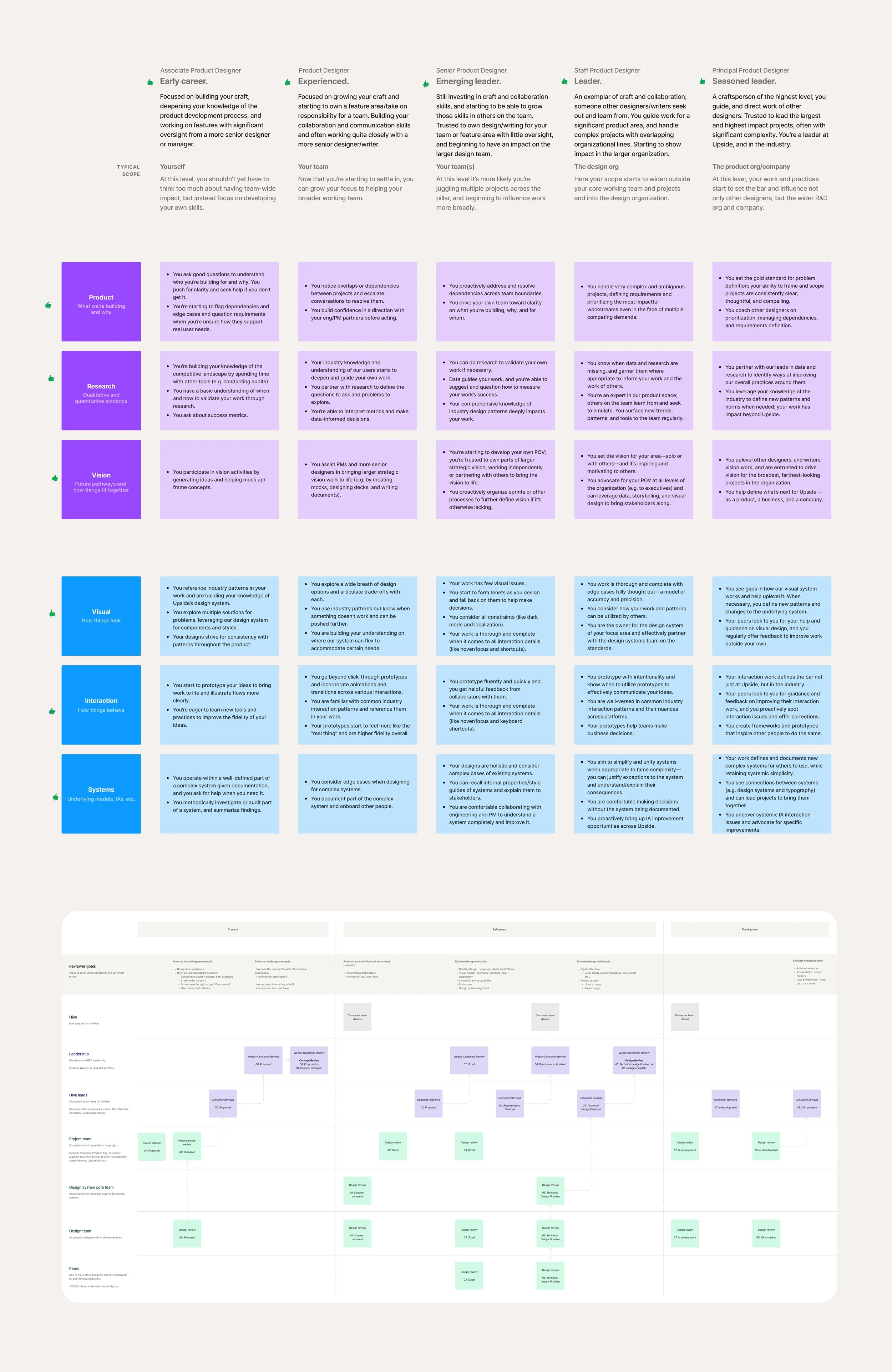
Building the system behind the system.
Upside’s design function lacked structure, shared standards, and cross-functional clarity.
To sustain product transformation, we rebuilt how design operated — embedding process, ownership, and strategic alignment across product and engineering.
-
Established structured design reviews tied to roadmap milestones
Introduced decision documentation and async feedback loops
Reduced iteration churn and increased engineering throughput
-
Embedded designers within senior engineering pods
Clarified ownership across growth, marketplace, and payments
Shifted from surface-level requests to system-level outcomes
-
Facilitated system-mapping workshops across leadership
Reframed product strategy around transaction probability
Connected UX improvements directly to revenue mechanics
-
Introduced growth ladders and performance clarity
Improved internal team NPS (–32 → positive territory if you want to state directionally)
Increased retention and cross-team trust
System-Level Outcomes
-92%
Dispute Costs
+251%
Transaction Volume
#1
App Store Ranking
$2M
Annual Revenue Lift
Reflections
Upside’s growth challenge was not a single UX issue — it was a system misalignment between payments, trust, infrastructure, and organizational process.
Stabilizing disputes unlocked revenue. Rebuilding the app unlocked iteration speed. Restructuring design unlocked long-term scalability.
Growth doesn’t scale without operational clarity. Design, when embedded at the system level, becomes an economic lever — not a surface layer.